On the first floor of the Huntington Art Gallery, in the Large Library, a draft page of Benjamin Franklin's autobiography carries a broad dark stain. It has long been believed that Franklin knocked over his own inkwell. The page is in a room of Henry and Arabella Huntington's former residence, and it stays there through Monday, Nov. 30. After that, the next pieces from the Library's collections take their turn.
That is how The Huntington shows its books and manuscripts now. For about a century the Library's treasures had a fixed address on Oxford Road. Through at least spring 2029 they appear in timed installments, much like a touring exhibition. If you live a few minutes away in San Marino, you now need a calendar to see them.
A 1919 Building Goes Quiet Until 2029
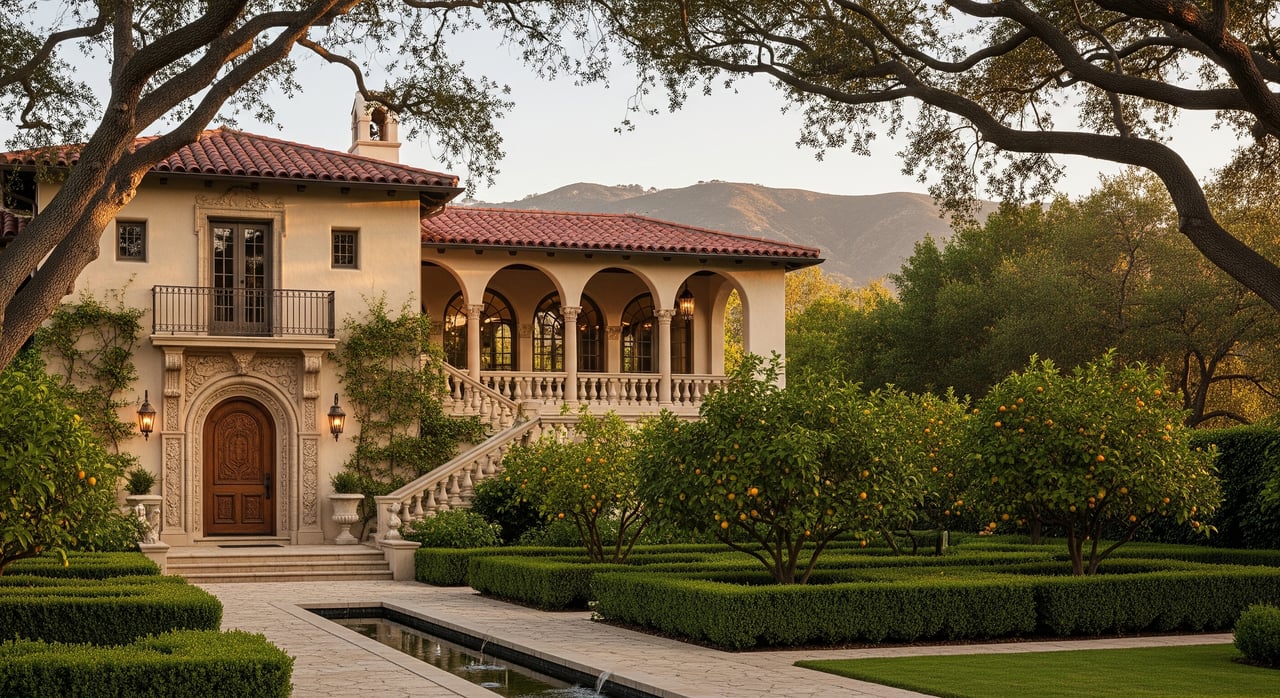
The Library building opened in 1919 and was designed by Myron Hunt, the Pasadena architect who also designed the Huntington residence that now houses the Art Gallery. This spring it closed for the first major renovation in its 107-year history, Pasadena Now reported in February. That closed the exhibition halls where visitors had long stood in front of the Gutenberg Bible and the Ellesmere Chaucer manuscript.
The project turns the building into the Library/Art Building, a modernization of about 83,000 square feet led by RAMSA, Robert A.M. Stern Architects, with Samuel Anderson Architects advising on collections storage and conservation studios. The same report put the fundraising campaign at $126.6 million, with more than $100 million already committed. Plans call for restoring the historic exhibition halls, adding about 8,000 square feet of conservation studio space, and building a new Works on Paper Study Center. The Art Museum's works on paper will move into the new building too. That collection of more than 38,000 drawings, watercolors and prints makes up upwards of 80 percent of the museum's holdings, and much of it is light-sensitive and rarely shown.
The Huntington's Library/Art Building page says the exhibition halls are expected to reopen in spring 2029. The gardens, galleries and programs remain open, and the reading rooms and research services for readers and Research Fellows are unchanged. For the general visitor, the Library's public face has moved across the lawn into a series called "Stories from the Library," shown inside the Art Gallery.
Two Rooms, Two Floors, Until Nov. 30
The current pair of installments opened Saturday, June 27, 2026, and both close Monday, Nov. 30, 2026. Each one takes a single theme and runs it through the collection, so one visit covers centuries.
"Damaged Goods," Large Library, first floor. This installment collects materials marked by natural processes, human error and deliberate censorship. Franklin's draft is the centerpiece. Around it:
- Hirose Tomoshige's Edo-period arithmetic guide Sanpō chie no umi taizen, or Practical Mathematics for Commerce, with pages bored through by bookworms drawn to its mulberry paper.
- Alexander Gardner's "cracked-plate" portrait of Abraham Lincoln, made weeks before the assassination. Gardner pieced the two halves of the broken glass negative together to make a single print, then discarded the negative.
- Alexander Wilson's 1808 American Ornithology, where ink from one plate reacted with the facing page and left a brown "ghost image" of an ivory-billed woodpecker, a bird believed to be extinct.
The Huntington's exhibition page also lists an unidentified photographer's daguerreotype, Woman seated in chair, Cecil's Records of the Chase and Memoirs of Celebrated Sportsmen, and a Book of Hours from around 1300.
"Imperfections often tell us as much as the works themselves. These marks, stains, and alterations preserve moments of use, emotion, and human intervention that might otherwise be lost to history."
Erin Chase, associate curator of architecture and photography, said that in The Huntington's June announcement of the pair.
"The Mirror of the Moon," Focus Gallery, second floor. Upstairs, the moon is the theme. The installment begins with Galileo Galilei's Sidereus nuncius, or Starry Messenger, the 1610 book that recorded craters and mountains on a moon long thought to be a smooth sphere. Beside it sits a model based on Johannes Kepler's improved two-lens telescope design. Johannes Regiomontanus' 1476 Calendarium, which predicted eclipses, is on view, and so is George Gilden's handwritten A Meteorological Dyary and Prognostication, which illustrates a lunar eclipse. Photography comes in with prints from the Observatoire de Paris' Atlas photographique de la lune, produced between 1896 and 1910, and a 1992 mosaic of the moon's north pole made by NASA's Galileo spacecraft.
One object has a local connection. In a 1969 notebook, Octavia E. Butler, the speculative fiction writer and longtime Pasadena resident, logged the Apollo 11 landing as she watched it on television, noting times, data and Neil Armstrong's first words from the surface. Her later Parable novels open on July 20, the date of that landing. The Huntington also holds archives and rare books from the Carnegie Observatories' Mount Wilson Observatory Collection, part of the astronomy history kept just below the mountain.
"The moon is more than a rock bound to Earth in its orbit. It is a mirror of humanity," Joel Klein, Molina Curator for the History of Medicine and Allied Sciences, said in the same announcement.
The Days Left, Read Against the Ticket Rules
Counting Thursday, Nov. 12, and closing day, 19 dates remain on the calendar. Fewer of them are simple walk-up days than that number suggests. The Huntington is open 10 a.m. to 5 p.m. Wednesday through Monday and closed Tuesdays. Reservations are required Friday through Sunday, on holidays and during peak seasons, and Thanksgiving week, Nov. 20 through 29, is a listed peak season. Adult admission is $29 Monday through Thursday and $34 on weekends, holidays and peak days.
| Dates | Days | Adult admission | Reservation required |
|---|---|---|---|
| Nov. 12 | Thursday | $29 | No |
| Nov. 13 to 15 | Friday to Sunday | $34 | Yes |
| Nov. 16 | Monday | $29 | No |
| Nov. 17 | Tuesday | Closed | |
| Nov. 18 to 19 | Wednesday and Thursday | $29 | No |
| Nov. 20 to 29 | Thanksgiving peak, closed Tuesday, Nov. 24 | $34 | Yes |
| Nov. 30 | Monday, final day | $29 | No |
Five days left are open, at the weekday rate and with no reservation required: Nov. 12, 16, 18, 19 and 30. The posted rates for seniors, military and students are $24 on weekdays and $28 on peak days, youth tickets are $13 and $15, Museums for All admission is $5, and children under 4 are free.
Free Day will not help with these two installments. It falls on the first Thursday of each month, which makes the next one Dec. 3, three days after both close. Free Day tickets are released at 9 a.m. on the last Thursday of the month for the following week, limited to five tickets per household per year, and members cannot use Free Day.
The busiest day in that peak stretch has a draw of its own. The Huntington Holiday Market runs Saturday, Nov. 21, from 10 a.m. to 6 p.m. It is free, has limited capacity, and spreads across the Huntington Store, Rose Hills Garden Court, Rothenberg Patio and Haaga Hall. Pasadena's Salted Butter Company is taking over Rothenberg Plaza with five stations for pastries and coffee, pies and savory items, giftable treats, cakes and floral décor. Its bakery's signature pastry made with The Huntington's orange marmalade is available beginning Nov. 6. Vendors include Cast & Clover, which makes jewelry and décor in Los Angeles from hand-pressed wildflowers, and Sweet P's Southern Desserts, which sells holiday cakes and pies. The market and the two installments overlap on that Saturday, but it falls inside the reservation window.
What the Gallery Holds After the Rotation
"Stories from the Library" has been running on a regular cycle. The previous pair ran from Dec. 13, 2025, to June 15, 2026, and the current pair opened June 27. The Huntington's Plan Your Visit page has listed short gallery closures for "light-sensitive rotations," because paper, ink and early photographs can only take so much exposure. The next two installments, "Stories from the Library: Final Moments" and "Stories from the Library: Depicting the Unknown," are scheduled to run through June 14, 2027, according to The Huntington's 2027 schedule announcement from Sept. 22.
The same schedule shows when the best-known object returns. The Gutenberg Bible will be the featured item in "Stories from the Library: Lure of the Gothic," from June 26 to Nov. 29, 2027. That installment traces the Gothic from the Germanic Goths through printing, architecture, bookbinding, zines and the modern subculture. It runs alongside "X-Ray Vision," which pairs early X-rays of bones with X-ray photographs of flowers. On Dec. 11, 2027, "HAIR!" takes over, with a lock of Abraham Lincoln's hair among its keepsakes, together with "Juvenilia," which shows childhood work such as a sketchbook by the young Robert Louis Stevenson and handmade books by the Brontë siblings and Christopher Isherwood. So the Gutenberg Bible, which generations of visitors saw in the Library exhibition halls, is scheduled for about five months in 2027.
Other exhibitions keep the campus busy between rotations. "This Land Is …" runs through Jan. 11, 2027. "Doyle Lane: Master of Clay" and "Laura Aguilar: Day of the Dead" both run through March 1, 2027, and "Sandy Rodriguez: Book 13" runs through April 26, 2027. "Petromania: Obsessing about Stones from Asia to America" opens Jan. 31, 2027, with stones, paintings and rare books from China, Japan and California. "David Hockney: The Four Seasons," built around his multiscreen landscape of Woldgate Woods, follows on April 18, 2027.
Chelby Crawford's background is in art history and antiques, and much of her work involves knowing the history of a house and presenting it well, much as the Huntington's curators do with stained pages and cracked negatives. If a home in San Marino or the nearby foothills has an architectural history worth telling, Chelby Crawford would welcome the conversation. Request a private market consultation.