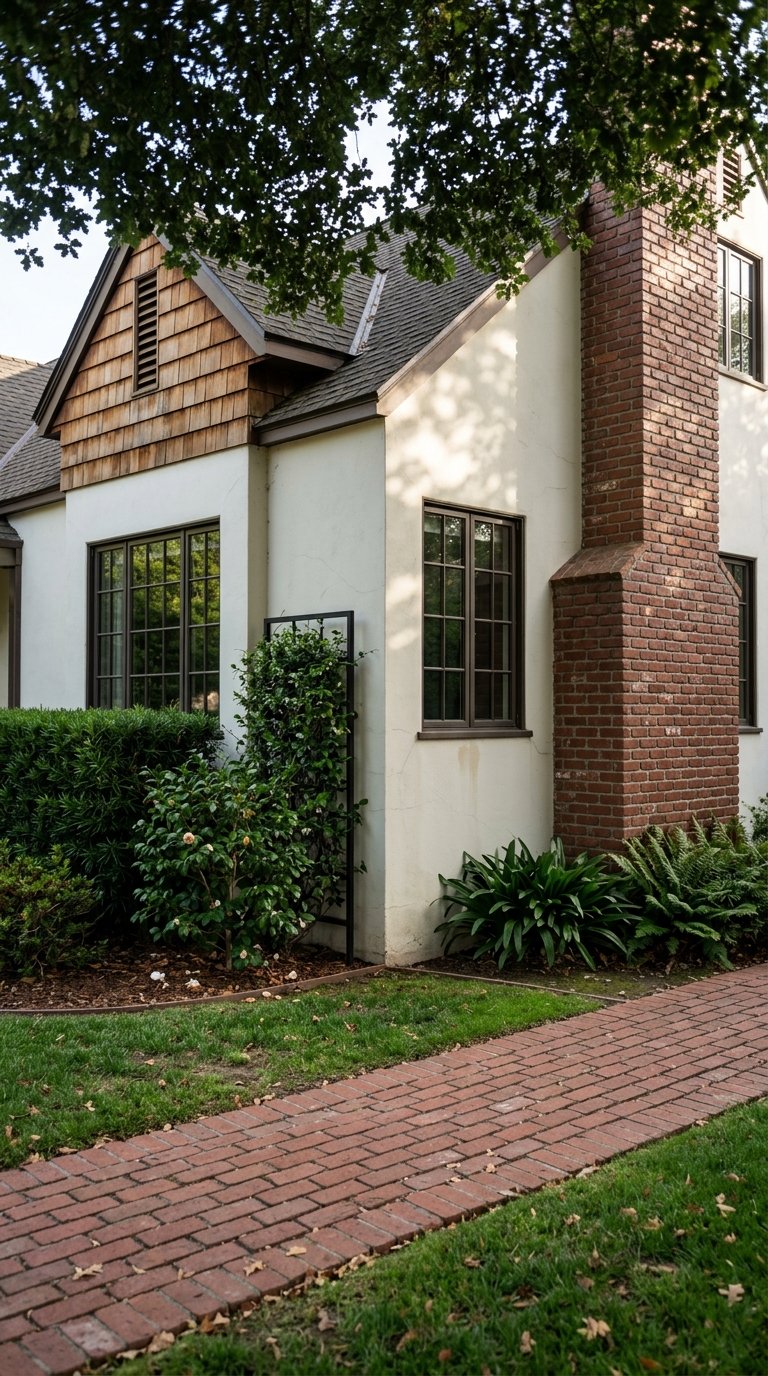
Drive to the top of Markridge Road and the small lot rarely fills, even on a Saturday. Chaparral rises from there toward Mount Lukens, the ground climbing from about 2,159 feet at the entrance to 4,775 feet at the park's far corner, with Angeles National Forest pressing in on three sides. Most people who park here walk past a two-story stone building at the trailhead without giving it a second look. It reads as infrastructure, maybe a restroom annex or an old equipment shed. It is neither. It is a stone barn, a remnant of the land's agricultural past.
For most of the twentieth century, this land was headed somewhere else entirely.
A Frenchman's Vineyard, Not a City Park
A Crescenta Valley Weekly account traces the story to 1885, when a French immigrant named George Le Mesnager bought hundreds of acres across the Crescenta Valley, including a parcel in Verdugo Canyon where the fairways of Oakmont Golf Course sit now, and a second parcel deeper in what is today Dunsmore Canyon. He planted thousands of grapevines and ran a winery near the Los Angeles River, at the intersection of Main and Mesnager streets downtown, where the harvest arrived by wagon from the hillside vines. Sometime between 1905 and 1911, accounts differ on the exact year, his son Louis began building a stone barn on the Dunsmore Canyon property. Its ground floor held livestock and storage. Its purpose was agricultural, not scenic.
The Fire That Wine Almost Won
Prohibition took effect in 1920 and shut down commercial winemaking, though home winemaking kept the family's vines producing through the 1920s. In 1933, with repeal approaching that December, the barn was leased to a group of World War I veterans who saw an opening in the wine trade. That November, before they could cash in, a wildfire tore through the canyon and gutted the building. The vats inside burst, and roughly 25,000 gallons of nearly finished wine poured out the front door. Because the barn's walls were solid stone, only the roof had to be rebuilt. The Le Mesnager family added a second-floor living space and moved in, staying from 1937 until 1960.
Eighteen Years Between "For Sale" and "Protected"
When the family decided to move on in 1960, they offered the land first to the City of Glendale and then to the state. Both passed. For the next several years the barn found a quieter second life as part of an equestrian center, used for horse stables rather than wine storage. In 1968, the property was sold outright to a developer with plans for hundreds of hillside homes. What followed was not a quick rezoning. Local residents organized against the tract, and the fight over the land's future dragged on for eighteen years before Glendale finally purchased the 709-acre property in 1986. Eighteen years is a long time for a piece of ground to sit zoned for one future while residents argued for another. The park exists because that argument was won, not because the hillside was always destined to stay open.
The short version, chronologically:
- 1885 – George Le Mesnager purchases vineyard land in the Crescenta Valley and Verdugo Canyon.
- 1905 to 1911 – His son Louis builds the stone barn for storage and livestock.
- 1933 – A November wildfire guts the barn's interior; the stone shell survives.
- 1937 to 1960 – The family rebuilds the roof, adds living quarters, and stays on the property.
- 1960 to 1968 – The barn serves as part of an equestrian center, used for horse stables.
- 1968 – The land is sold to a developer planning a hillside housing tract.
- 1986 – After a local fight over the land's future, the City of Glendale purchases the 709-acre site outright.
- 2004 onward – A demonstration vineyard, none of the original vines, is replanted near the barn.
- 2009 – A hiker finds a surviving grapevine growing through ash after the Station Fire, near where George Le Mesnager once planted his personal favorite grapes from France.
What the Trails Actually Ask of You Now
The Dunsmore Canyon Trail leaves from the lot beside the barn and follows the creek bed before the climbing starts. From there, the Crescenta View Trail connects into Angeles National Forest, exposed and steep enough that shade is scarce for long stretches. The benchmark route for local trail runners is Mount Lukens via Dunsmore Canyon, a 9.8-mile round trip with about 2,772 feet of climbing, and a longer combination through Crescenta View and the Rim of the Valley trail carries the single steepest total ascent in the park. For a shorter outing, the Le Mesnager Loop circles back near the barn with ridge-top views without committing to the full summit push, while the Mummy Rock Trail and the Vineyard Trail, both starting from the picnic area, stay lower and easier.
Dogs are welcome on leash. Warmer months bring rattlesnakes sunning on exposed rock, and long pants are worth the discomfort through sections known for poison oak. The creek in Dunsmore Canyon runs dry for long stretches of the year and fills again after rain, which is as good a reason as any to time a visit around the season rather than assume the stream will be there. One detail worth knowing before you plan around driving up: the city runs a free weekend shuttle called the Wander the Wilderness Bus, alternating Saturdays and Sundays from Fremont Park and Pacific Park in South Glendale, a genuinely useful option for anyone without easy parking or a car.
The Vineyard That Came Back
The barn itself now houses the Stone Barn Nature Center, reopened after an eleven million dollar renovation and open to the public on a limited schedule, with exhibits on the canyon's chaparral, its wildlife, and its history as a working vineyard. Out back, the vines are real again. The Stone Barn Vineyard Conservancy, an all-volunteer group led in large part by local historian and winemaker Stuart Byles, maintains 81 grapevines planted since 2004, none of them original stock. Recent plantings added Mission, Burger, and Zinfandel varieties historic to the region. The strangest footnote to the whole story came after the 2009 Station Fire, when a hiker near the top of the canyon spotted a grapevine growing up through the ash, close to where family descendants say George Le Mesnager once planted his own favorite grapes brought over from France, vines everyone had assumed were long gone.
Grounds Worth Walking On
None of this is visible from the trail itself. The chaparral looks permanent, the way open hillsides in the foothills tend to. But this particular hillside spent eighteen years sold to someone else for a subdivision that never broke ground, and it only stayed open because people who lived nearby decided it should. That is worth knowing the next time you park at that small lot and walk past the stone barn without stopping. The ground under your boots was a live question for most of a generation, not a settled fact.
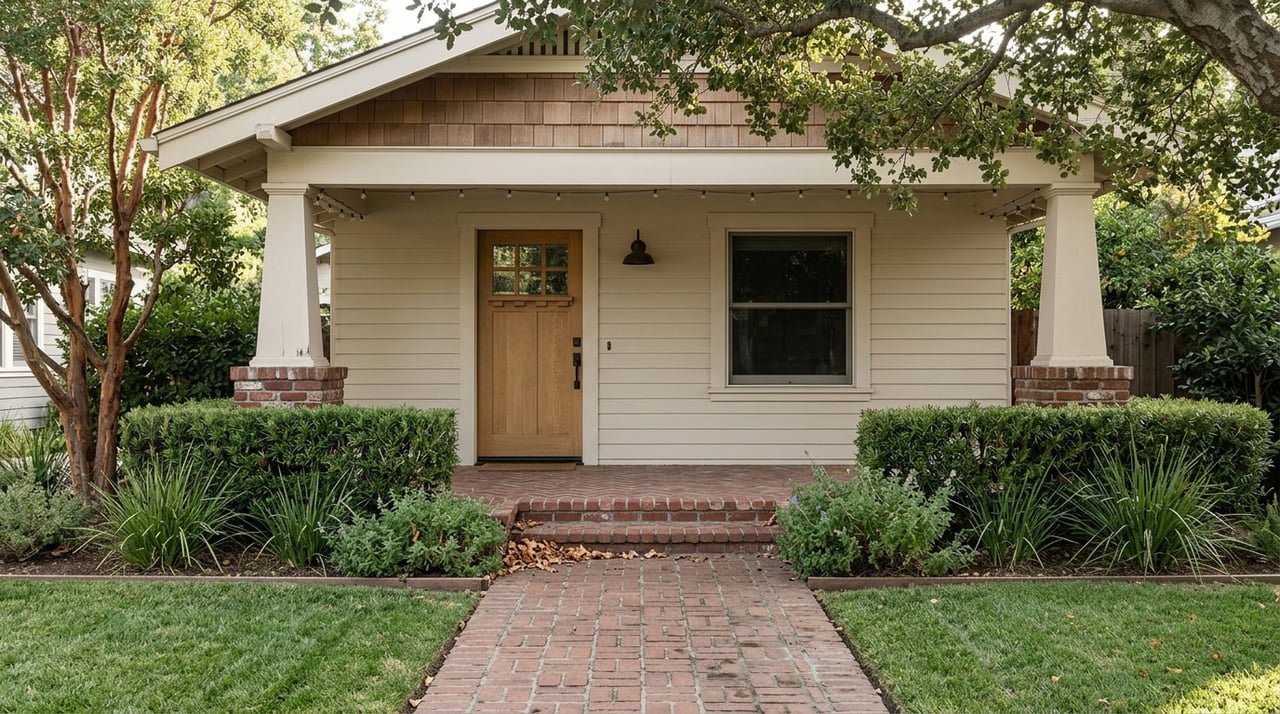
There is something in that history that tracks closely with how Chelby Crawford approaches the foothill communities she works in, a belief that the character of a place, whether a stone barn or a Craftsman bungalow, survives because someone chose to protect it rather than let it default to whatever came next. If you are thinking about your own place in Glendale or the surrounding foothills, and want a conversation grounded in that same regard for what makes a property and its setting worth preserving, request a private market consultation.